[EVE Altruist] Know Your Enemy - T1 Attack Frigates

Know Your Enemy - T1 Attack Frigates
Tech 1 Frigates are one of the first ships that a new player learns to fly, and their value combined with their low skill requirements make them an excellent choice for someone embarking on a career in PVP. In fact the pure enjoyment and versatility provided by these ships leads many PVPers to fly them as their solo PVP vessel of choice long after they're capable of flying larger or more expensive ships.
While all T1 frigates are technically the same class, CCP's recent 'Tiericide' balancing efforts have grouped them into a number of clear sub-classes. This article will focus on the Attack Frigate sub-class.
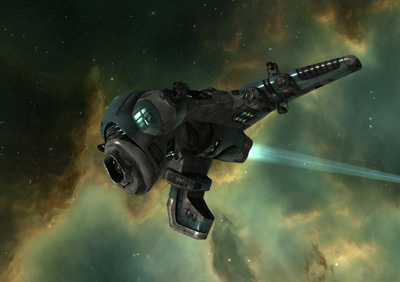
The Attack Frigates are designed for speed and tackling capability. All ships in this class receive a bonus significantly reducing the capacitor need of tackle modules. Combined with their high speed and strong capacitor regeneration, this makes the Attack Frigates an excellent choice for both long range and close range tackle. Attack Frigates are significantly more fragile than the beefier Combat Frigates, however their damage outputs remain similar to their more resilient cousins leaving them very effective if they're able to dictate the terms of an engagement and avoid taking damage themselves. Combined with their high speed (allowing them excellent range dictation) the Attack Frigates can make very effective solo vessels, and flown correctly they can be every bit as dangerous as their Combat counterparts.
Slasher
 The Slasher is a fast ship, able to push 1.4km/s with an Afterburner or 3.7km/s with a MWD without any additional speed mods. A 4/4/2 slot layout lends it plenty of versatility either as a tackler or as a flexible kiter/brawler. In addition to the class-wide bonus reducing cap use for tackle modules, the Slasher receives bonuses to projectile damage and tracking speed. With three turrets, this makes it very close to the Rifter in terms of offensive capability.
The fourth mid slot is really what makes this ship as effective as it is. This lets the Slasher shield tank (preserving its natural speed) while still fitting the holy trinity of PVP - propulsion module, Scram and Web. Alternatively the Slasher can be flown with just a Scram or long point, and use its additional mid slot for electronic warfare such as a Tracking Disruptor, or for dual propulsion.
While theoretically the Slasher could mount a very light armour tank, they're almost always shield tanked. This is usually in the form of either a buffer tank using a single Medium Shield Extender, or an active tank using a Medium Ancillary Shield Booster. The buffer tanked Slasher is still on the fragile side compared to the Combat Frigates, coming in at around 5k EHP with a typical fit. A MASB variant offers a meagre 2k EHP leaving this ship in significant danger of simply being volleyed, however this is compensated for by an active tank of around 90dps - not a huge amount, but enough if the Slasher is also able to mitigate some damage through other means. The speed of the Slasher is its main method of doing so - with an Afterburner and Web its ability to dictate range is exceptional, and it's fairly easy for a Slasher to hold you at range or getting under your guns as desired.
The Slasher is generally an autocannon boat. With one fewer low slot for damage mods than the Rifter and no launcher hardpoint, the Slasher can't squeeze out quite as much damage as its Combat cousin although it remains close - around 100-120dps on a typical fit, although a dps-oriented one may do a little more. The damage projection on its ACs is fairly decent, complementing the Slasher's already strong range dictation abilities - around 0.7+5.5km with close range ammo, or 1.4+8.3km with Barrage. While the Slasher can hit for reasonable damage out near the edge of web range, it will be deep in falloff and realistically putting out far less there than in its ideal damage output at that range. As a result, a Slasher will generally put out significantly less damage while kiting than it will when brawling. Some Slasher fits feature artillery for higher damage out at range in exchange for losing the brawling option, however the Slasher's mid-heavy slot layout isn't really conducive to a long ranged kiter and you'll probably find most of them operate in or close to web range even when arty fit.
As with all Attack Frigates, you'll often encounter the Slasher in a pure tackling role as part of a gang. The fit for such a ship is likely to be very similar to an MWD fit buffer Slasher, except using a long point and probably not coming anywhere close to web range. This is a fairly agile ship so you may find it difficult to throw off or catch, and the ease with which it can be shield tanked means you're less likely to encounter an untanked one than you are the other tackle frigs.
Fighting a Slasher is like a more extreme version of fighting a Rifter - they're likely to use their range dictation to either kite you if you're shorter ranged, or brawl in close if they can get under your guns. Be prepared for a Tracking Disruptor, which will exacerbate this effect although unless it goes without tank, this will likely mean it doesn't have a Web. It's not a particularly tough ship, so you don't have to be in range for long - overheat your Afterburner early if you have one, and try to force the fight into your ideal range (you might not be able to hold it there for long, but you don't need to). If you're unable to prevent the Slasher from dictating the course of the engagement, you're likely to find yourself fighting at a disadvantage and possibly unable to hit it at all. EM or Thermal damage will help you out considerably, hitting the Slasher's resist holes and reducing the amount of time you need to be in range for to take it down.
Atron
 Strap a bunch of Light Neutron Blasters to a 1MN Afterburner, and you get an Atron. This little ship flies fast and packs a great punch, without being distracted by unnecessary things like tank. A balanced 4/3/3 slot layout leaves the Atron well rounded, able to fit propulsion, Scram, and Web, while saving its low slots to enhance its damage, range or speed.
The Atron is usually fit as a blaster ship - a role it fills very well. Its three turrets receive bonuses to hybrid damage and falloff, making the Atron both powerful and flexible, able to deal with kiters (or to kite itself) more easily than most other blaster ships of its size. A typical blaster Atron can put out anything up to 200dps, at ranges of around 1.6+6.1km with Navy Antimatter (with the Atron's falloff bonus it doesn't really make sense to use Void) or an impressive 3.6+8.5km with Null, roughly comparable to small autocannons with Barrage. When fit specifically for range, that can easily go higher. While the Atron doesn't receive a tracking bonus, the tracking on blasters is already strong and you're unlikely to reduce its damage much by orbiting in close.
It's quite difficult to effectively tank the Atron without cutting its range and damage output significantly, and most people simply don't bother to go further than a Damage Control. Thanks to the naturally high Gallente structure HP, that alone should give the Atron a buffer of around 2.6k EHP - fragile, but more than its peers would have if they were fit in the same way. The Atron's real 'tank' comes instead from its speed and damage output - with an Afterburner this ship pushes a healthy 1.4km/s (or around 3.7km/s with a MWD), allowing it to close quickly and get under enemy guns or pull range if its taking too much fire. Failing all else, it can simply hope that its powerful damage output fill finish the job before the job finishes it! The Atron's fourth high slot allows it to potentially fit a Nos, however this is often eschewed in favour of bigger blasters. Atrons (like all Attack Frigates) already have strong base capacitor, and if carrying a Nos you can expect them to be quite resistant to neuting.
Rail Atrons are not unusual, but are in the minority. These typically fight inside web range, using the Atron's high speed along with a Scram and Web to hold opponents at a comfortable distance while 125mm Railguns let the Atron project its own damage to that range with ease. A rail Atron can hit out to 7.8+12km with Navy Antimatter on a typical fit, for a very competitive 130dps. Tackle Atrons are also fairly common, generally fit with a MWD and long point and otherwise very similar to your standard tackler to take advantage of the tackle module cap bonus which they share with the rest of the Attack Frigate class. They may or may not be tanked (usually using a shield buffer if they are), but will likely be difficult to catch.
Fighting an Atron isn't quite like fighting a regular blaster ship since they can project damage relatively easily. Rather than trying to pull range and avoid its damage, your priority should instead be applying your own damage output to capitalise on its weak tank. Providing you're able to hit effectively, an Atron usually won't last very long. If you're flying a particularly fragile ship yourself, do what you can to make sure you're applying your own damage output more quickly and effectively than they are - overheat immediately, and pray! The damage type you use is fairly unimportant since the Atron's main tank is in structure, and the Atron itself will hit your shields and armour with roughly the same effectiveness.
Condor
 The Condor has great damage projection, able to wield either rockets or light missiles with comparable effectiveness. This ship receives a double bonus to Kinetic missile and rocket damage in addition to the class-wide bonus to tackle module cap use, giving the Condor quite robust damage for a missile ship. A 4/4/2 slot layout means plenty of mid slots for range control, synergising nicely with the Condor's other strengths.
While the Condor doesn't appear to do high dps on paper, its damage output will generally be much more consistent than that of a turret ship. Between 80 and 110 dps is typical of a rocket fit, up to ranges of around 10km depending on the circumstances of the engagement. Light missiles come in at around 90dps (the bottom end is higher than for rockets since it's rare to see a light missile fit without damage mods) at up to about 40km, give or take. Since the Condor's bonus is only to Kinetic damage, that's what you're most likely to encounter - a Condor using any other flavour of missile (which they do do from time to time) will put out substantially less dps.
The Condor is the slowest of the Attack Frigates, with top speeds of around 3.4km/s with a MWD or 1.3km/s with an Afterburner - still substantially faster than most ships outside its class. While its raw speed might not be that impressive, the Condor's four mid slots make it very adept at dictating range when fighting inside 10km, and the fact that its weapons function equally well at any range plays into this nicely. It's very easy for an AB Condor to hold you out near the edge of web range and simply lets its rockets do the work while you're unable to respond. Light missile fits don't benefit nearly so much from the Condor's mid slot count, however they may be able to field some surprise EWAR in one or more of those slots. Tackle Condors are typically very similar to the light missile variant except that they're usually tankier, and don't actually carry light missiles.
With four mid slots this ship is naturally a shield tanker, and like the Slasher in comes in both buffer and active variants. A buffer tanked Condor with a Medium Shield Extender is nothing special - about 4 or 5k EHP on a typical fit. Alternatively a Medium Ancillary Shield Booster fits very easily on this ship thanks to its excellent CPU, offering an active tank of between 80 and 120dps depending on the fit for so long as charges last. If the Condor pilot is willing to sacrifice their web, that can go as high as 240dps with a second ASB, still before heat. Light missile condors are less fortunate than their rocket counterparts, and are generally left without enough powergrid to tank effectively in either form (a Damage Control and potentially a Small Ancillary Shield Booster are about the extent of what you're likely to encounter). As with all T1 shield tankers, EM and Thermal damage will serve you well against the Condor.
Against either variant, it's a safe bet that a Condor will try to kite you - they have little reason to want to get close unless you're flying something with good range and poor tracking. Even more so than against the other Attack Frigs, being able to apply your own damage effectively is key to winning this fight. In the case of a light missile or tackle variant this means catching it in the first place, and against the rocket version it means making sure you can get into your own effective range. Keeping your speed high will reduce missile damage, although the effect of this will probably be minimal unless either the Condor doesn't have a web, or you're particularly fast (such as another Attack Frigate running an Afterburner). Assuming you're flying a turret ship, you ideally want a situation where both ships are moving, but angular velocity is low to maximise your own damage output - burning directly towards or away from the Condor is likely to achieve this for you, with burning away being especially effective since it also reduces the Condor's effective range.
Executioner
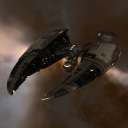 The Executioner follows a similar pattern to the Atron - a 4/3/3 slot layout with strong damage output and a tendency not to fit very much tank. Like most aggressive Amarr turret ships, the Executioner receives bonuses to turret cap use and damage in addition to the usual bonus to the cap requirement of tackle modules.
There are two common ways to fit an Executioner. The most standard of these is to fit Afterburner, Scram, and Web, and fight as a flexible kiter/brawler much like the Atron. The Executioner performs very well in this role, with comparable speed to the Atron (1.3km/s with AB) while putting out anything up to 180dps with Navy Multifrequency crystals at 3.8+2.5km, or around 140dps with Scorch at 11+2.5km. With Scorch, the Executioner really shines - since it still has the high tracking of close range guns it'll hit far more consistently than a rail or arty ship, and given that its range is almost entirely optimal it still puts out its full 'on paper' damage output at the edge of web range, unlike blasters and autocannons which will find their real damage output significantly reduced. The fact that the Executioner can instantly switch between kiter and brawler lends it a surprisingly great deal of flexibility, although it generally remains very fragile. Some variants of this setup solve that by swapping the Web for a Medium Shield Extender, more than doubling its buffer but detracting from its ability to dictate range.
The second school of fitting is to kite outside of web range, using Tracking Enhancers and Energy Locus rigs to enhance the range of the Executioner's pulse lasers in mimicry of the Imperial Navy Slicer. While the Executioner doesn't perform anywhere close to its faction counterpart in this role, it can still make a fairly handy setup - around 16+4.1km with Scorch and 125dps is quite easy to achieve, while the ship pushes around 3.7km/s under MWD with a single speed mod. Particularly convenient here is the combination of strong base capacitor and the class-wide bonus to tackle modules, allowing the 'baby slicer' Executioner to be completely cap stable - something which the actual Slicer is not. However the fact that it has to operate really quite close to web range in order to hit effectively leaves the Executioner at quite a high risk of getting tackled, and unlike ships with true long ranged weapon systems it can't just solve the problem by using longer ranged ammo.
Both varieties of Executioner are often very lightly tanked - a solitary Damage Control is not uncommon, giving this ship around 2.4k EHP (a little less than the Atron). Some Slicer-style Executioners may not even fit that, opting for pure speed and damage instead. Variants with a Medium Shield Extender are a little tougher, coming in at around 5.5k EHP.
Executioners are very effective as tacklers, being quite easy to fit without powergrid mods and thus leaving plenty of low slots free to enhance its speed. While it may not be the fastest Attack Frigate by default, a tackle Executioner with two speed mods can push a very impressive 4.4km/s, making it in effect the fastest Attack Frig. It's fairly easy to get a Medium Shield Extender onto a tackle setup, however despite this it remains very common to see them almost or completely untanked.
At the risk of sounding like a broken record, the key thing to remember when fighting an Executioner is to make sure you can apply your own damage effectively - it's usually quite fragile, and will break relatively easily if pushed. Don't go chasing after a ship that you can't catch - in the case of the baby Slicer variant get them to chase after you, and then double back to get a scram/web on rather than trying to burn for them initially - this is a fast ship, and catching them via conventional means won't be easy. If you're able to get in close, you may well mitigate some damage just by getting as close as possible and taking advantage of the relatively poor tracking on Medium Pulse Lasers, although if you're well tanked yourself them this shouldn't be necessary. This is particularly true if you're up against a MSE variant, or any other setup without a Web. The EM and Thermal damage of the Executioner leaves it slightly weak against armour tanks, however it's very proficient against shield tankers like the Slasher and Condor so be wary of your EM resist when taking one on.
While all T1 frigates are technically the same class, CCP's recent 'Tiericide' balancing efforts have grouped them into a number of clear sub-classes. This article will focus on the Attack Frigate sub-class.

The Attack Frigates are designed for speed and tackling capability. All ships in this class receive a bonus significantly reducing the capacitor need of tackle modules. Combined with their high speed and strong capacitor regeneration, this makes the Attack Frigates an excellent choice for both long range and close range tackle. Attack Frigates are significantly more fragile than the beefier Combat Frigates, however their damage outputs remain similar to their more resilient cousins leaving them very effective if they're able to dictate the terms of an engagement and avoid taking damage themselves. Combined with their high speed (allowing them excellent range dictation) the Attack Frigates can make very effective solo vessels, and flown correctly they can be every bit as dangerous as their Combat counterparts.
Slasher
The Slasher is a fast ship, able to push 1.4km/s with an Afterburner or 3.7km/s with a MWD without any additional speed mods. A 4/4/2 slot layout lends it plenty of versatility either as a tackler or as a flexible kiter/brawler. In addition to the class-wide bonus reducing cap use for tackle modules, the Slasher receives bonuses to projectile damage and tracking speed. With three turrets, this makes it very close to the Rifter in terms of offensive capability.The fourth mid slot is really what makes this ship as effective as it is. This lets the Slasher shield tank (preserving its natural speed) while still fitting the holy trinity of PVP - propulsion module, Scram and Web. Alternatively the Slasher can be flown with just a Scram or long point, and use its additional mid slot for electronic warfare such as a Tracking Disruptor, or for dual propulsion.
While theoretically the Slasher could mount a very light armour tank, they're almost always shield tanked. This is usually in the form of either a buffer tank using a single Medium Shield Extender, or an active tank using a Medium Ancillary Shield Booster. The buffer tanked Slasher is still on the fragile side compared to the Combat Frigates, coming in at around 5k EHP with a typical fit. A MASB variant offers a meagre 2k EHP leaving this ship in significant danger of simply being volleyed, however this is compensated for by an active tank of around 90dps - not a huge amount, but enough if the Slasher is also able to mitigate some damage through other means. The speed of the Slasher is its main method of doing so - with an Afterburner and Web its ability to dictate range is exceptional, and it's fairly easy for a Slasher to hold you at range or getting under your guns as desired.
The Slasher is generally an autocannon boat. With one fewer low slot for damage mods than the Rifter and no launcher hardpoint, the Slasher can't squeeze out quite as much damage as its Combat cousin although it remains close - around 100-120dps on a typical fit, although a dps-oriented one may do a little more. The damage projection on its ACs is fairly decent, complementing the Slasher's already strong range dictation abilities - around 0.7+5.5km with close range ammo, or 1.4+8.3km with Barrage. While the Slasher can hit for reasonable damage out near the edge of web range, it will be deep in falloff and realistically putting out far less there than in its ideal damage output at that range. As a result, a Slasher will generally put out significantly less damage while kiting than it will when brawling. Some Slasher fits feature artillery for higher damage out at range in exchange for losing the brawling option, however the Slasher's mid-heavy slot layout isn't really conducive to a long ranged kiter and you'll probably find most of them operate in or close to web range even when arty fit.
As with all Attack Frigates, you'll often encounter the Slasher in a pure tackling role as part of a gang. The fit for such a ship is likely to be very similar to an MWD fit buffer Slasher, except using a long point and probably not coming anywhere close to web range. This is a fairly agile ship so you may find it difficult to throw off or catch, and the ease with which it can be shield tanked means you're less likely to encounter an untanked one than you are the other tackle frigs.
Fighting a Slasher is like a more extreme version of fighting a Rifter - they're likely to use their range dictation to either kite you if you're shorter ranged, or brawl in close if they can get under your guns. Be prepared for a Tracking Disruptor, which will exacerbate this effect although unless it goes without tank, this will likely mean it doesn't have a Web. It's not a particularly tough ship, so you don't have to be in range for long - overheat your Afterburner early if you have one, and try to force the fight into your ideal range (you might not be able to hold it there for long, but you don't need to). If you're unable to prevent the Slasher from dictating the course of the engagement, you're likely to find yourself fighting at a disadvantage and possibly unable to hit it at all. EM or Thermal damage will help you out considerably, hitting the Slasher's resist holes and reducing the amount of time you need to be in range for to take it down.
Atron
Strap a bunch of Light Neutron Blasters to a 1MN Afterburner, and you get an Atron. This little ship flies fast and packs a great punch, without being distracted by unnecessary things like tank. A balanced 4/3/3 slot layout leaves the Atron well rounded, able to fit propulsion, Scram, and Web, while saving its low slots to enhance its damage, range or speed.The Atron is usually fit as a blaster ship - a role it fills very well. Its three turrets receive bonuses to hybrid damage and falloff, making the Atron both powerful and flexible, able to deal with kiters (or to kite itself) more easily than most other blaster ships of its size. A typical blaster Atron can put out anything up to 200dps, at ranges of around 1.6+6.1km with Navy Antimatter (with the Atron's falloff bonus it doesn't really make sense to use Void) or an impressive 3.6+8.5km with Null, roughly comparable to small autocannons with Barrage. When fit specifically for range, that can easily go higher. While the Atron doesn't receive a tracking bonus, the tracking on blasters is already strong and you're unlikely to reduce its damage much by orbiting in close.
It's quite difficult to effectively tank the Atron without cutting its range and damage output significantly, and most people simply don't bother to go further than a Damage Control. Thanks to the naturally high Gallente structure HP, that alone should give the Atron a buffer of around 2.6k EHP - fragile, but more than its peers would have if they were fit in the same way. The Atron's real 'tank' comes instead from its speed and damage output - with an Afterburner this ship pushes a healthy 1.4km/s (or around 3.7km/s with a MWD), allowing it to close quickly and get under enemy guns or pull range if its taking too much fire. Failing all else, it can simply hope that its powerful damage output fill finish the job before the job finishes it! The Atron's fourth high slot allows it to potentially fit a Nos, however this is often eschewed in favour of bigger blasters. Atrons (like all Attack Frigates) already have strong base capacitor, and if carrying a Nos you can expect them to be quite resistant to neuting.
Rail Atrons are not unusual, but are in the minority. These typically fight inside web range, using the Atron's high speed along with a Scram and Web to hold opponents at a comfortable distance while 125mm Railguns let the Atron project its own damage to that range with ease. A rail Atron can hit out to 7.8+12km with Navy Antimatter on a typical fit, for a very competitive 130dps. Tackle Atrons are also fairly common, generally fit with a MWD and long point and otherwise very similar to your standard tackler to take advantage of the tackle module cap bonus which they share with the rest of the Attack Frigate class. They may or may not be tanked (usually using a shield buffer if they are), but will likely be difficult to catch.
Fighting an Atron isn't quite like fighting a regular blaster ship since they can project damage relatively easily. Rather than trying to pull range and avoid its damage, your priority should instead be applying your own damage output to capitalise on its weak tank. Providing you're able to hit effectively, an Atron usually won't last very long. If you're flying a particularly fragile ship yourself, do what you can to make sure you're applying your own damage output more quickly and effectively than they are - overheat immediately, and pray! The damage type you use is fairly unimportant since the Atron's main tank is in structure, and the Atron itself will hit your shields and armour with roughly the same effectiveness.
Condor
The Condor has great damage projection, able to wield either rockets or light missiles with comparable effectiveness. This ship receives a double bonus to Kinetic missile and rocket damage in addition to the class-wide bonus to tackle module cap use, giving the Condor quite robust damage for a missile ship. A 4/4/2 slot layout means plenty of mid slots for range control, synergising nicely with the Condor's other strengths.While the Condor doesn't appear to do high dps on paper, its damage output will generally be much more consistent than that of a turret ship. Between 80 and 110 dps is typical of a rocket fit, up to ranges of around 10km depending on the circumstances of the engagement. Light missiles come in at around 90dps (the bottom end is higher than for rockets since it's rare to see a light missile fit without damage mods) at up to about 40km, give or take. Since the Condor's bonus is only to Kinetic damage, that's what you're most likely to encounter - a Condor using any other flavour of missile (which they do do from time to time) will put out substantially less dps.
The Condor is the slowest of the Attack Frigates, with top speeds of around 3.4km/s with a MWD or 1.3km/s with an Afterburner - still substantially faster than most ships outside its class. While its raw speed might not be that impressive, the Condor's four mid slots make it very adept at dictating range when fighting inside 10km, and the fact that its weapons function equally well at any range plays into this nicely. It's very easy for an AB Condor to hold you out near the edge of web range and simply lets its rockets do the work while you're unable to respond. Light missile fits don't benefit nearly so much from the Condor's mid slot count, however they may be able to field some surprise EWAR in one or more of those slots. Tackle Condors are typically very similar to the light missile variant except that they're usually tankier, and don't actually carry light missiles.
With four mid slots this ship is naturally a shield tanker, and like the Slasher in comes in both buffer and active variants. A buffer tanked Condor with a Medium Shield Extender is nothing special - about 4 or 5k EHP on a typical fit. Alternatively a Medium Ancillary Shield Booster fits very easily on this ship thanks to its excellent CPU, offering an active tank of between 80 and 120dps depending on the fit for so long as charges last. If the Condor pilot is willing to sacrifice their web, that can go as high as 240dps with a second ASB, still before heat. Light missile condors are less fortunate than their rocket counterparts, and are generally left without enough powergrid to tank effectively in either form (a Damage Control and potentially a Small Ancillary Shield Booster are about the extent of what you're likely to encounter). As with all T1 shield tankers, EM and Thermal damage will serve you well against the Condor.
Against either variant, it's a safe bet that a Condor will try to kite you - they have little reason to want to get close unless you're flying something with good range and poor tracking. Even more so than against the other Attack Frigs, being able to apply your own damage effectively is key to winning this fight. In the case of a light missile or tackle variant this means catching it in the first place, and against the rocket version it means making sure you can get into your own effective range. Keeping your speed high will reduce missile damage, although the effect of this will probably be minimal unless either the Condor doesn't have a web, or you're particularly fast (such as another Attack Frigate running an Afterburner). Assuming you're flying a turret ship, you ideally want a situation where both ships are moving, but angular velocity is low to maximise your own damage output - burning directly towards or away from the Condor is likely to achieve this for you, with burning away being especially effective since it also reduces the Condor's effective range.
Executioner
The Executioner follows a similar pattern to the Atron - a 4/3/3 slot layout with strong damage output and a tendency not to fit very much tank. Like most aggressive Amarr turret ships, the Executioner receives bonuses to turret cap use and damage in addition to the usual bonus to the cap requirement of tackle modules.There are two common ways to fit an Executioner. The most standard of these is to fit Afterburner, Scram, and Web, and fight as a flexible kiter/brawler much like the Atron. The Executioner performs very well in this role, with comparable speed to the Atron (1.3km/s with AB) while putting out anything up to 180dps with Navy Multifrequency crystals at 3.8+2.5km, or around 140dps with Scorch at 11+2.5km. With Scorch, the Executioner really shines - since it still has the high tracking of close range guns it'll hit far more consistently than a rail or arty ship, and given that its range is almost entirely optimal it still puts out its full 'on paper' damage output at the edge of web range, unlike blasters and autocannons which will find their real damage output significantly reduced. The fact that the Executioner can instantly switch between kiter and brawler lends it a surprisingly great deal of flexibility, although it generally remains very fragile. Some variants of this setup solve that by swapping the Web for a Medium Shield Extender, more than doubling its buffer but detracting from its ability to dictate range.
The second school of fitting is to kite outside of web range, using Tracking Enhancers and Energy Locus rigs to enhance the range of the Executioner's pulse lasers in mimicry of the Imperial Navy Slicer. While the Executioner doesn't perform anywhere close to its faction counterpart in this role, it can still make a fairly handy setup - around 16+4.1km with Scorch and 125dps is quite easy to achieve, while the ship pushes around 3.7km/s under MWD with a single speed mod. Particularly convenient here is the combination of strong base capacitor and the class-wide bonus to tackle modules, allowing the 'baby slicer' Executioner to be completely cap stable - something which the actual Slicer is not. However the fact that it has to operate really quite close to web range in order to hit effectively leaves the Executioner at quite a high risk of getting tackled, and unlike ships with true long ranged weapon systems it can't just solve the problem by using longer ranged ammo.
Both varieties of Executioner are often very lightly tanked - a solitary Damage Control is not uncommon, giving this ship around 2.4k EHP (a little less than the Atron). Some Slicer-style Executioners may not even fit that, opting for pure speed and damage instead. Variants with a Medium Shield Extender are a little tougher, coming in at around 5.5k EHP.
Executioners are very effective as tacklers, being quite easy to fit without powergrid mods and thus leaving plenty of low slots free to enhance its speed. While it may not be the fastest Attack Frigate by default, a tackle Executioner with two speed mods can push a very impressive 4.4km/s, making it in effect the fastest Attack Frig. It's fairly easy to get a Medium Shield Extender onto a tackle setup, however despite this it remains very common to see them almost or completely untanked.
At the risk of sounding like a broken record, the key thing to remember when fighting an Executioner is to make sure you can apply your own damage effectively - it's usually quite fragile, and will break relatively easily if pushed. Don't go chasing after a ship that you can't catch - in the case of the baby Slicer variant get them to chase after you, and then double back to get a scram/web on rather than trying to burn for them initially - this is a fast ship, and catching them via conventional means won't be easy. If you're able to get in close, you may well mitigate some damage just by getting as close as possible and taking advantage of the relatively poor tracking on Medium Pulse Lasers, although if you're well tanked yourself them this shouldn't be necessary. This is particularly true if you're up against a MSE variant, or any other setup without a Web. The EM and Thermal damage of the Executioner leaves it slightly weak against armour tanks, however it's very proficient against shield tankers like the Slasher and Condor so be wary of your EM resist when taking one on.
Source: Know Your Enemy - T1 Attack Frigates